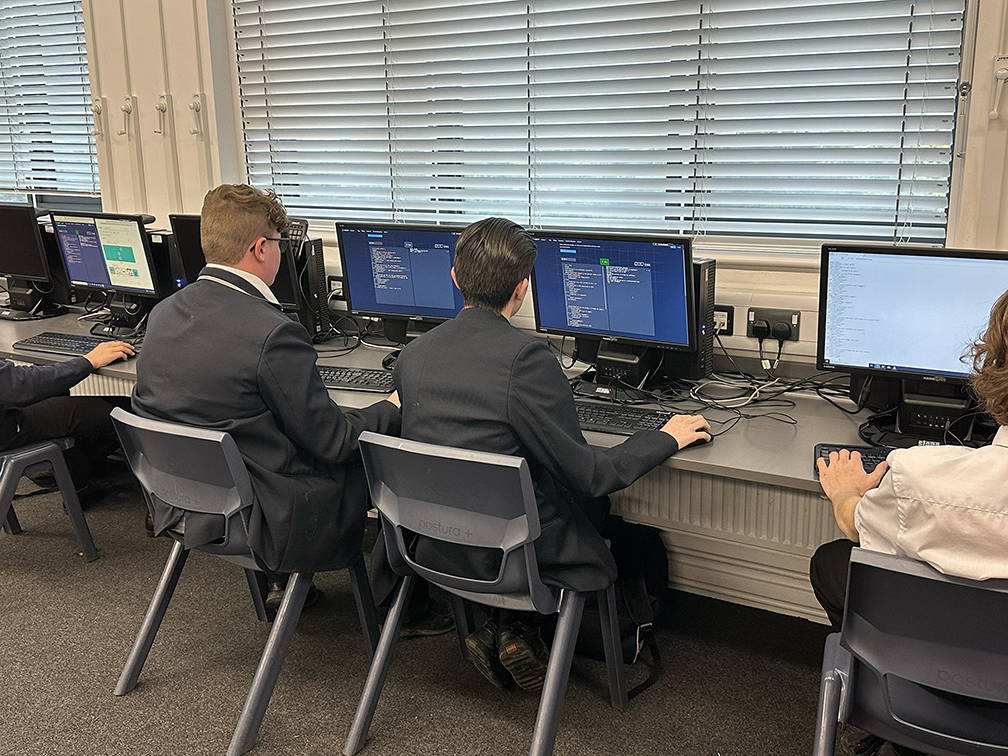
Computing is evolving all the time in school. There was an increasing amount of criticism of the old ICT courses that schools used to teach. Some people said it was little more than learning about how to use Microsoft Office.
Computing – and computer science – has come a long way since then. It develops critical thinking, analysis and problem-solving skills through the study of computer programming.
Three computer scientists created Snapchat and within four years the software was sending six billion videos per day. This could not have happened without a solid foundation of knowledge of information technology and computer science.
Students complete a number of creative projects across multiple applications to develop their digital literacy skills. They explore different themes to be able to present, collect and analyse data to meet the given needs of a user.
Students are expected to identify a range of ways to use technology safely, respectfully and securely to protect themselves online. They investigate digital artefacts to identify their trustworthiness in order to revise and reuse them for a given purpose. They explore real-world examples to learn how to identify cybersecurity threats and ways of protecting networks and computer devices to keep themselves and other users safe.
Students also learn about the hardware and software that make up a computer system and how they communicate with one another and with other systems.
They study different programming languages – textual and block-based – and apply logical reasoning to solve a variety of computational problems. They learn how various types of data are represented within a computer using binary, including text, sounds and pictures.
| Year 7 Content (20-week rotation) | Topic |
|---|---|
| Digital Literacy | Topic 1 |
| Basic Computer Systems | Topic 2 |
| Year 8 Content (20-week rotation) | Topic |
|---|---|
| Scratch Programming | Topic 1 |
| Computer Systems | Topic 2 |
| Data Collection and Analysis | Topic 3 |
| Year 9 Content | Term |
|---|---|
| Python Programming | Autumn |
| Algorithms | Spring |
| System Architecture | Summer |
| Networks and Cybersecurity | Summer |
Students can opt for a GCSE in computer science.
Examination Board: OCR
Specification Name: Computer Science
Link: Computer Science
This qualification involves developing and applying the fundamental principles and concepts of computer science, including abstraction, decomposition, logic, algorithms and data representation. Students analyse problems in computational terms through practical experience of solving such problems, including designing, writing and debugging programs.
They discover the different components that make up digital systems, and how they communicate with one another and with other systems. They learn about how changes in technology affect safety and about the latest ways to protect themselves online. They learn about the impact of digital technology on individuals and on society, including ethical, cultural and environmental factors.
| Year 10 Content | Term |
|---|---|
| Data Representation and Boolean Logic | Autumn |
| Memory and Storage | Autumn |
| Designing Algorithms | Autumn |
| System Architecture and Programming Fundamentals | Spring |
| Searching and Sorting Algorithms and Programming Fundamentals | Spring |
| Networks and Programming Fundamentals | Summer |
| Network Connections and Protocols | Summer |
| Year 11 Content | Term |
|---|---|
| Network Security and System Software | Autumn |
| Programming Fundamentals | Autumn |
| Legal, Ethical, Cultural and Environmental Impacts of Computers | Autumn |
| Languages and IDEs | Autumn |
| Additional Programming Techniques | Spring |
| Algorithms | Spring |
| Defensive Design | Spring |
Alternatively, students can opt to do a BTEC qualification in digital information technology. It gives them the opportunity to develop sector-specific knowledge and skills in a practical learning environment.
Examination Board: Pearson
Specification Name: BTEC Level 1/Level 2 Tech Award in Digital Information Technology
Link: Digital Information Technology
Students develop key skills in digital information technology such as project planning, designing and creating user interfaces, and creating dashboards to present and interpret data. They learn about the processes that underpin effective ways of working in digital information technology, including project planning, the iterative design process, cybersecurity, virtual teams, and legal and ethical codes of conduct. They also develop their personal-management and communication skills.
| Year 10 Content | Term |
|---|---|
| User Interface | Autumn |
| Collecting and Interpreting Data | Spring |
| Modern Technologies | Summer |
| Year 11 Content | Term |
|---|---|
| Modern Technologies and Cybersecurity | Autumn |
| Impact of Digital Systems | Autumn |
| Planning and Communications | Spring |
*This article was published in Ridgeway New Times in 2022–23. Some of the details about curriculum content may no longer be up to date.